
Ex-ground grown trees: How to set them up for long-term success.
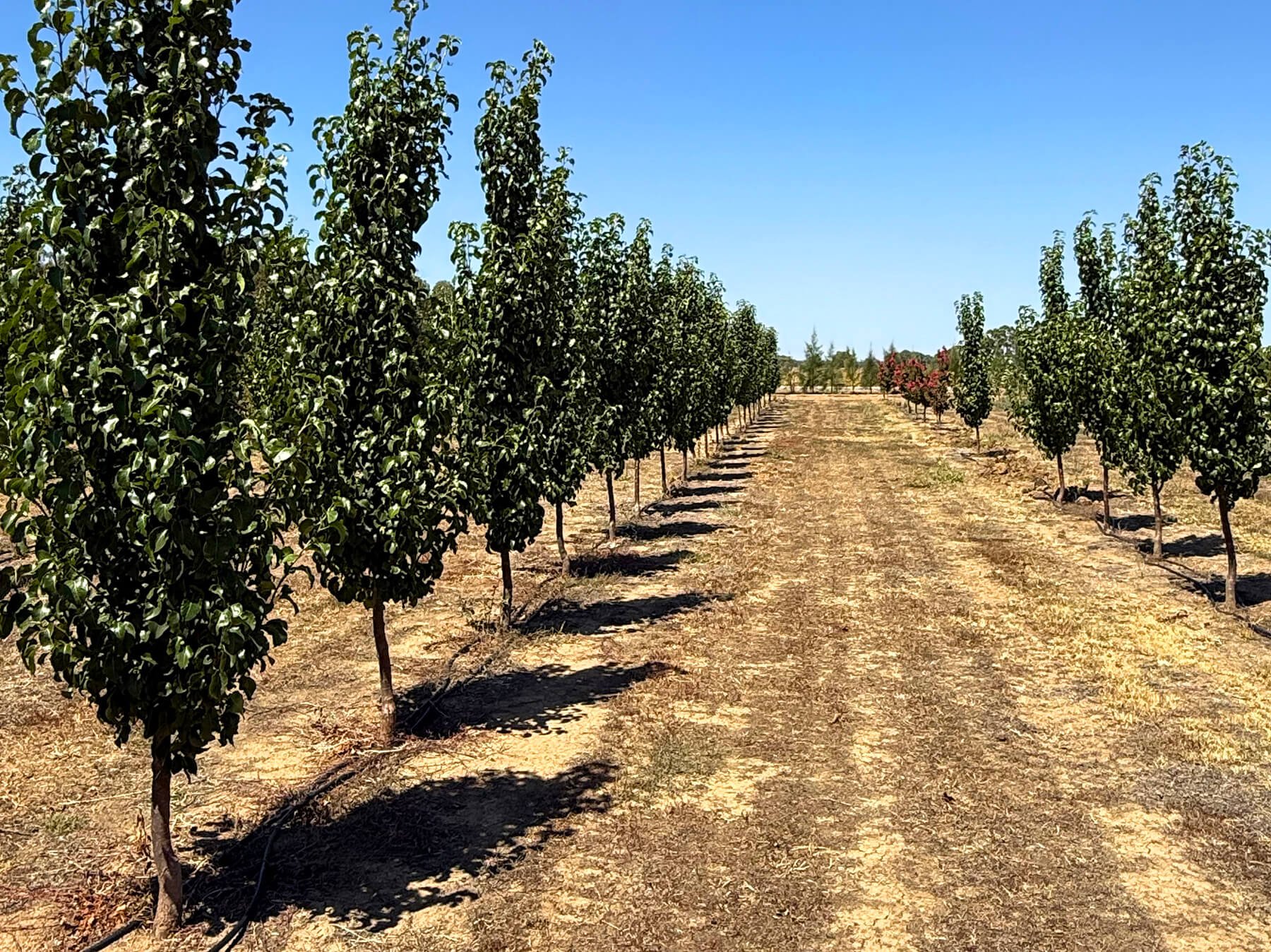
Pyrus Calleryana ‘Capital’
Although it’s still hot and dry on the farm, this is the time of year when the rhythm shifts on the farm.
Rows that have been quietly growing are suddenly centre stage as prep begins for winter.
Roots that have been building strength underground are about to begin their next chapter.
And that’s the thing about ex-ground grown trees - most of the important work has already happened long before the tree is lifted.
If you’re planning winter planting for a streetscape, civic upgrade or large commercial site, what happens in the field directly shapes what happens on your project.
Our bare root stock is available now for order. Download the latest bare root stocklist here.
What “ex-ground grown” really means
When we talk about ex-ground grown trees, we mean trees that have been grown in an open field and then lifted - either as bare root stock or with a prepared rootball - for transplanting.
They’re not container-raised or constrained by pot walls. They’ve developed in real soil, under natural conditions.
That’s an important step because trees grown in the ground develop:
Natural root architecture
Structural stability from the outset
Caliper growth that reflects field conditions
In other words, they grow just like trees should grow.
It starts with the roots
Out in the field, it’s not just about growing to a certain height. We’re also building a root system that will thrive when it’s time to move.
Through planned root pruning, we encourage a dense, fibrous root structure closer to the trunk. This kind of work is steady and deliberate, and we make sure it’s underway well before lifting season.
When the tree is eventually lifted, we want a root system that’s compact, balanced and ready to regenerate.
Without that preparation, a field-grown tree may develop long structural roots that extend well beyond the harvest zone. When those are cut suddenly during lifting, the next stage of establishment becomes more difficult.
With preparation, the transition is smoother as the tree has already been conditioned. You can see the difference in year one.
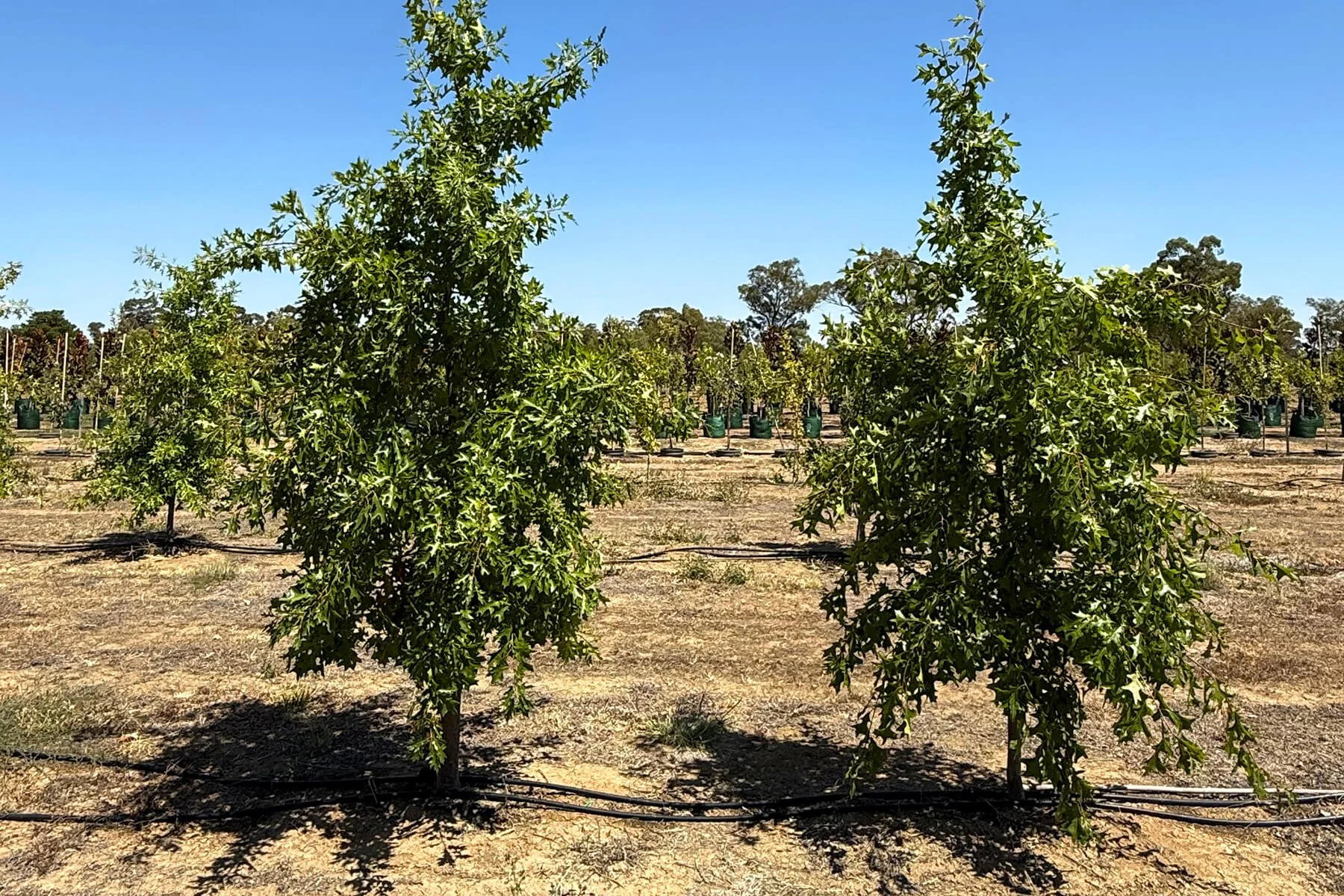
Quercus palustris Pin oak
Balancing the canopy before transplanting
Another part of the process happens above ground.
As trees mature in the field, we manage their structure carefully, with light shaping but no cosmetic pruning.
The goal is simple: maintain a healthy shoot-to-root balance.
When a tree is lifted, some root mass is inevitably lost, and if the canopy has been allowed to outgrow the root system, transplant stress increases.
By managing growth as the tree develops, we ensure the canopy is proportionate to the root system it leaves with.
For our clients, that translates into more predictable tree establishment and fewer surprises down the track.
Timing is everything
On the farm, lifting is timed carefully.
For deciduous species, we work within dormancy, when transpiration is low, and energy reserves are stored. This means the tree is physiologically ready to relocate.
It’s important that the process isn’t rushed - lifting isn’t about convenience but rather physiology. Which means getting the window right makes all the difference when the tree reaches site.
Why bare root trees are perfect for winter planting
Winter is where bare root ex-ground trees really come into their own.
For large-scale projects, bare root offers clear advantages:
Easier transport
Faster planting rates
Reduced freight weight
Efficient handling on site
But it only works when timing, handling and moisture control are managed properly, from the moment the tree leaves the field to the moment it’s in the ground.
The chain between the grower and the contractor is extremely important during winter programs.
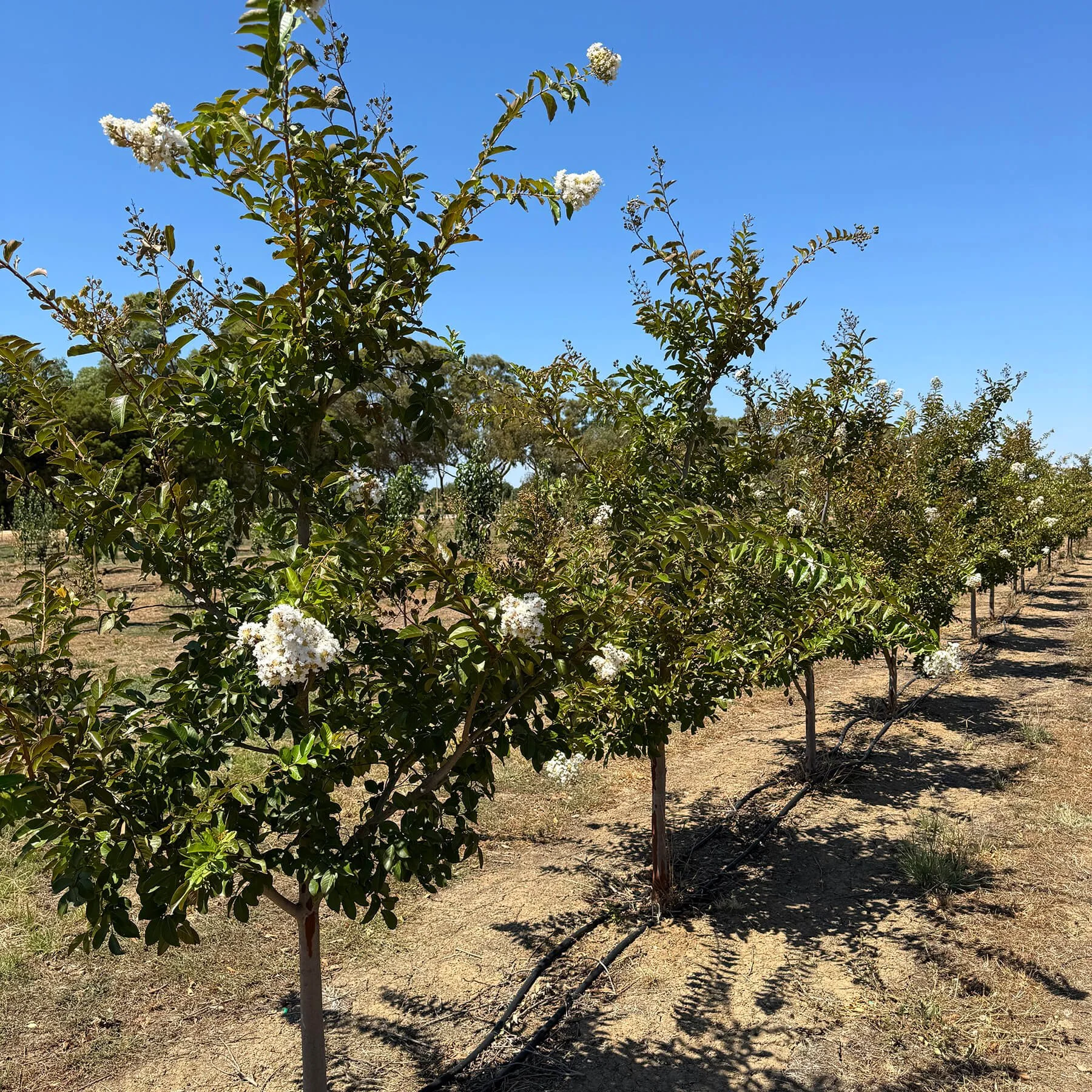
Lagerstroemia indica x fauriei ‘Natchez’
Matching farm conditions to site conditions
One of the more practical conversations we have with landscapers and councils is about soil.
Trees grown in open ground adapt to those soil conditions over time. When they’re transplanted into compacted or poorly drained subgrade, establishment slows.
So the best outcomes come when site preparation matches the quality of the stock:
Compaction addressed early
Drainage considered in design
Planting pits prepared properly
Field-grown trees are resilient. But they still need a good start.
What to ask before you specify
If you’re specifying ex-ground grown trees for transplanting, the conversation should be about more than height and caliper.
It’s also worth asking:
Has the tree been root-pruned during production?
How long has it been growing in the field?
Has structural pruning been carried out?
When will lifting take place?
Transplant performance begins years earlier, in the rows.
From field to streetscape
Winter is lifting season and trees that have been carefully grown, shaped and conditioned are ready to move into their next setting - whether that’s a regional streetscape, a new estate or a civic upgrade.
And when the groundwork has been done properly, establishment feels almost uneventful, which is exactly what you want.
Ex-ground grown trees aren’t just about size or availability. They’re about preparation and building resilience before the move. The early quiet work does the main job so performance later feels straightforward.
If you’re planning winter planting, now is the time to have the conversation. Have a chat with Zac about your winter planting plans - stock is ready to order.
