
Acer negundo ‘Sensation’: A new version of a forgotten urban tree.
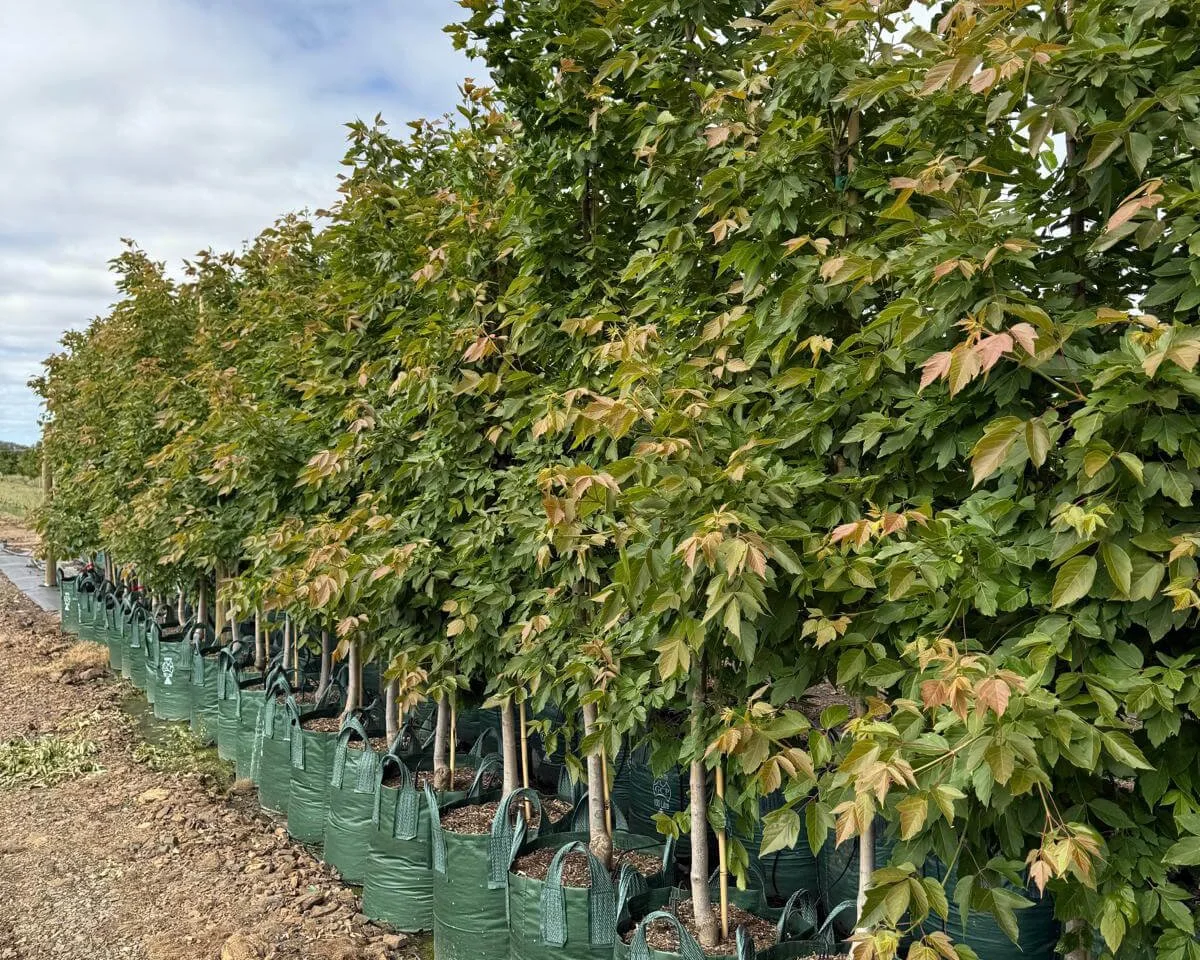
The workhorse of urban landscapes is making a comeback.
Some trees fade from landscape plans quietly. Not because they stop working, but because their reputation changes.
Acer negundo is one of them. Once widely planted across streets, parks and difficult urban sites, it gradually slipped down planting lists. Designers began favouring other maples, or moving toward species with a tidier reputation.
Yet the traits that made Acer negundo so widely used - speed, resilience and adaptability - never really disappeared.
What has changed now is the availability of better cultivars.
One of the most interesting is Acer negundo ‘Sensation’, a selection that keeps the toughness of the species while addressing the issues that caused designers to move away from it.
A resilient tree for difficult sites.
Many projects call for trees that can cope with tough conditions. Compacted soils, reflected heat, wind exposure and limited irrigation during establishment are all relatively expected conditions in urban landscapes.
This is where Acer negundo ‘Sensation’ shows its value. It retains the adaptability that made the species so widely planted in the past. The tree establishes quickly and with confidence, and tolerates a broad range of soil conditions.
For designers working with challenging urban environments, those qualities are hard to ignore, and these are the situations where ‘Sensation’ thrives.
If you’re exploring resilient species for difficult sites, the team at Arboretum Farm can help identify suitable trees for your project.
Why Acer negundo fell out of favour.
The original species built its reputation through reliability. Municipal planting programs across Australia and elsewhere relied on Acer negundo because it survived where other trees struggled.
But heavy use eventually brought criticism. The species can self-seed readily, particularly when male and female trees grow nearby. In some climates that behaviour led to volunteer seedlings appearing in garden beds and natural areas.
The result was a growing perception of the tree as ‘weedy’.
Designers also began to favour species with more formal structure or stronger autumn colour. Compared with some ornamental maples, the natural form of Acer negundo can appear loose and informal.
Over time, these issues pushed the species out of favour in many planting programs.
Yet those criticisms rarely allowed for the tree’s strengths until improvements were made through cultivar selection.
How ‘Sensation’ addresses the old criticisms.
Cultivars change how a species performs in the landscape.
Acer negundo ‘Sensation’ was selected specifically to improve several of the concerns associated with the species.
First, it is male, which means it does not produce the samaras responsible for unwanted seedlings. Removing seed production eliminates one of the main reasons the species gained a weedy reputation.
Second, ‘Sensation’ delivers reliable autumn colour. Where typical Acer negundo may show limited seasonal change, this cultivar develops consistent red to orange foliage in autumn.
The canopy also tends to form with a more balanced structure, creating a shade tree that feels suited to designed landscapes.
Importantly, these improvements come without losing the species’ fundamental strengths.
The qualities that made the species valuable.
Strip away the reputation and Acer negundo (and it’s cultivars like ‘Sensation) still offers a combination of traits that remain useful in modern landscapes.
Fast canopy development
Few temperate shade trees establish as quickly. On projects where early canopy matters - shelter planting, parklands or new streetscapes - this speed can be valuable.
Adaptability
The species tolerates a wide range of soil types, including poorer or disturbed soils often found in urban environments.
Heat and drought tolerance
Its natural range spans diverse climates. That adaptability translates well to sites experiencing higher temperatures and periodic water stress.
Filtered shade
The compound leaves create a lighter canopy than many large shade trees. This can work well in mixed plantings where some light penetration is desirable.
Acer negundo earned its place in urban planting programs for practical reasons. Those reasons have not disappeared.
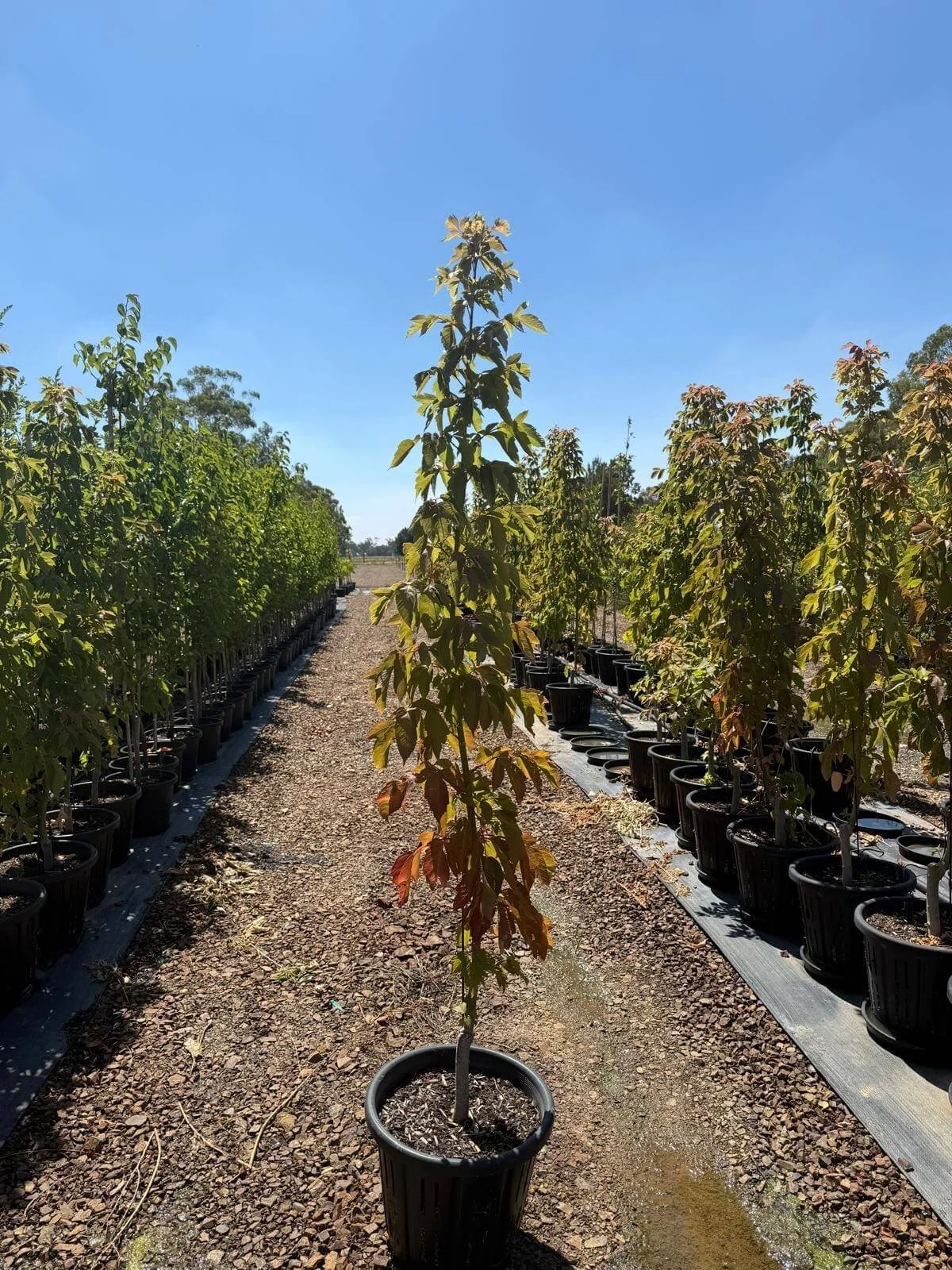
Acer negundo ‘Sensation’ – 400 mm
A role in contemporary planting strategies.
Urban planting is changing.
Cities are hotter with tougher soil conditions. Projects increasingly demand species capable of establishing quickly while tolerating environmental stress.
In these conditions, trees once dismissed as ordinary can become surprisingly useful.
Acer negundo ‘Sensation’ sits comfortably in that category.
It is unlikely to replace slower, long-lived canopy species in major civic landscapes. Nor should it. But in the right setting it can play a valuable supporting role.
For example:
early canopy in new developments
parkland plantings requiring rapid shade
streetscapes with challenging soil conditions
mixed plantings where filtered light is preferred
Used thoughtfully, the cultivar works alongside other species rather than competing with them.
Looking again at legacy species.
Landscape history is full of trees that move in and out of favour.
Sometimes the reputation changes because of genuine flaws. Sometimes it shifts because the species was used too widely.
And when this happens, improved cultivars quietly solve the original problems.
Acer negundo ‘Sensation’ represents that kind of evolution.
It keeps the resilience that made the species successful in the first place while addressing the seed production and aesthetic concerns that caused designers to move away from it.
The result is a tree that remains extremely useful under the right landscape conditions.
After all, many successful landscapes rely not on fashionable trees, but on species that quietly perform year after year. ‘Sensation’ may be one of them.
We have Acer negundo ‘Sensation’ ready to go in 400mm stock. Contact Zac for your order.
