
Tree of the month – Banksia serrata: Why we love ‘Old Man Banksia’

Summer on the farm
The summer season is in full swing on the farm, and, as always, it’s very satisfying to see our trees bursting into life after caring for them through winter.
Our current favourite is the Banksia serrata, which is benefiting from the early summer warmth and reliable moisture. We love the distinctive cylindrical flower spikes in winter and the sculptural serrated leaves from which it gets its name. There’s nothing else like it.
In the growing rows, the foliage is really coming into its own. You can tell when a species is happy when the growth goes from slow to vigorous almost overnight. It’s one of those moments where you walk the block and suddenly realise the trees have kicked into gear - lifting their heads, pushing out that fresh new growth, and responding to the shift in the season - you can really see the momentum.
We’ve been especially impressed with the structure in the 35–45L range this year. The canopies are full, symmetrical, and showing great consistency across rows. It’s the sort of result that tells you the early shaping and root development have paid off, and that the species is hitting its stride right on schedule.
All this is good news for supply, especially for coastal and urban sites where the Banksia serrata thrives.
Our Banksia Serrata is ready to plant now - Contact Zac to talk about ordering your supply of Banksia serrata.
Why we love the ‘Old Man’
Another reason 'Old Man Banksia' is our Tree of the Month is that it’s becoming a go-to for large-scale sites that need toughness without losing visual character.
It performs under pressure: wind, salt, heat, and even poor soils. It also offers architectural form, coarse texture, and structural canopy development, all useful traits in civic and coastal planting.
We’ve seen it do well in exposed public zones where other species show stress within a season or two. Serrata doesn’t just survive; it provides structure and delivers on the character that makes a site feel established.
Compared to other Banksias, serrata has more scale and density. It stands up as a feature or as part of broader, native palettes. And in bushfire-prone regions, its lignotuber-driven regrowth is another bonus. That regenerative capacity gives it long-term resilience, especially for projects where fire risk is a key design factor.
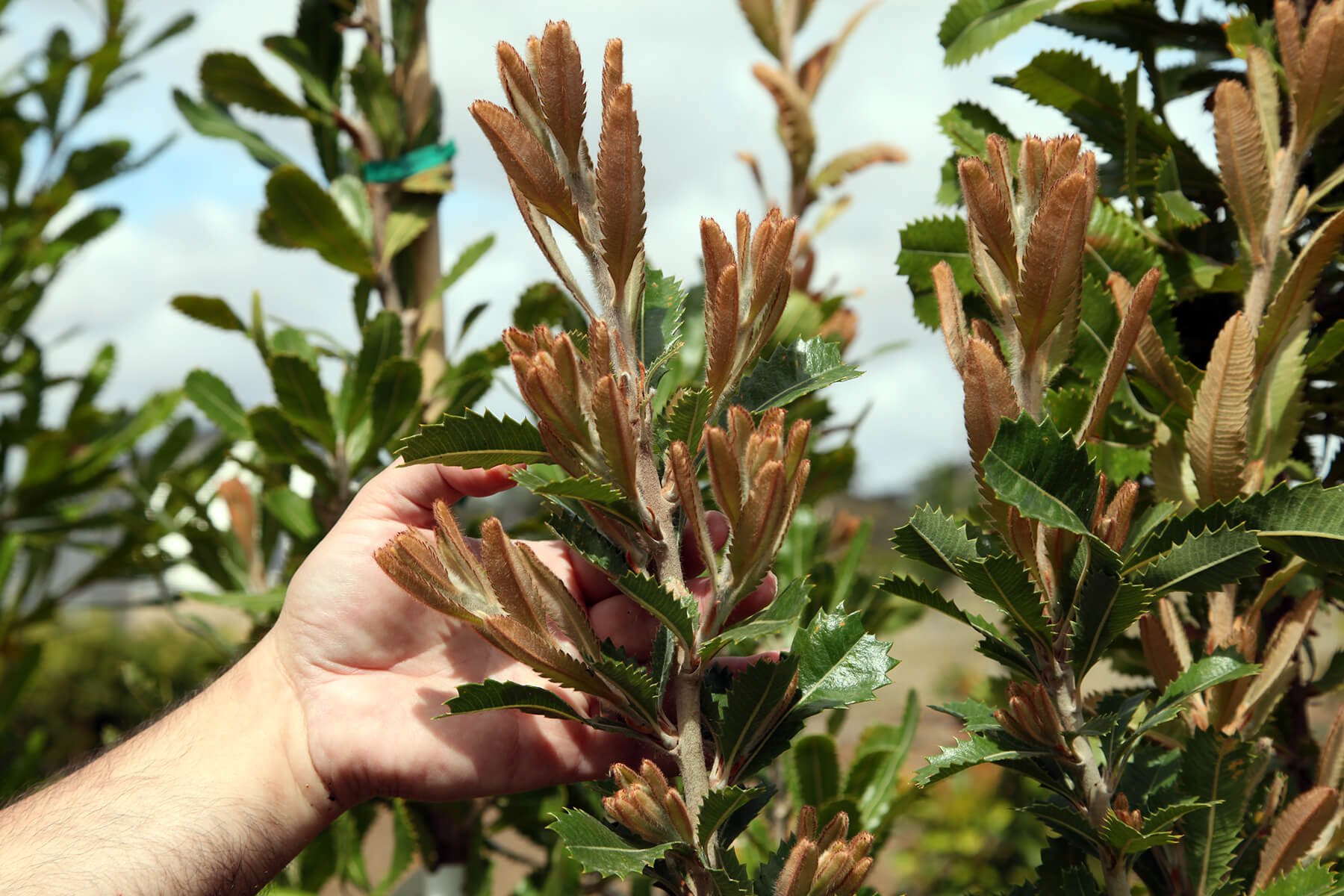
Seasonal lifecycle: A whole year of interest
Spring & Early Summer
We love the intense flushes of new foliage and the start of flowering from October through January. This is also the sweet spot for planting advanced stock into projects. Planting at this time gives trees the best chance to settle into the landscape before the peak heat of summer.
Mid to Late Summer
Handles dry heat with steady growth on the farm and doesn’t mind warm conditions, but benefits from consistent (but not excessive) moisture. Excellent for fire-prone zones. We find Serrata is a good fit for projects that need drought resilience without relying on high-maintenance irrigation.
Autumn
Cooler temps shift focus underground, and it’s a good time for planting and root establishment. Late-season leaf flush brings softness to the tree, and bark character begins to show as the canopy thins. This seasonal shift also helps reveal the sculptural appearance of the branching, which gives the tree its distinctive winter silhouette.
Winter
Peak flowering. Gravity-defying, big, creamy-yellow cylinders stand upright through the canopy. Sculptural structure becomes dominant: woody cones, textured bark, hardened foliage. The tree holds its own in wild weather and stands out in mixed native designs.
Another reason we love this tree - it’s one of the few species that maintains visual interest across foliage, flower and form during the quietest part of the year.
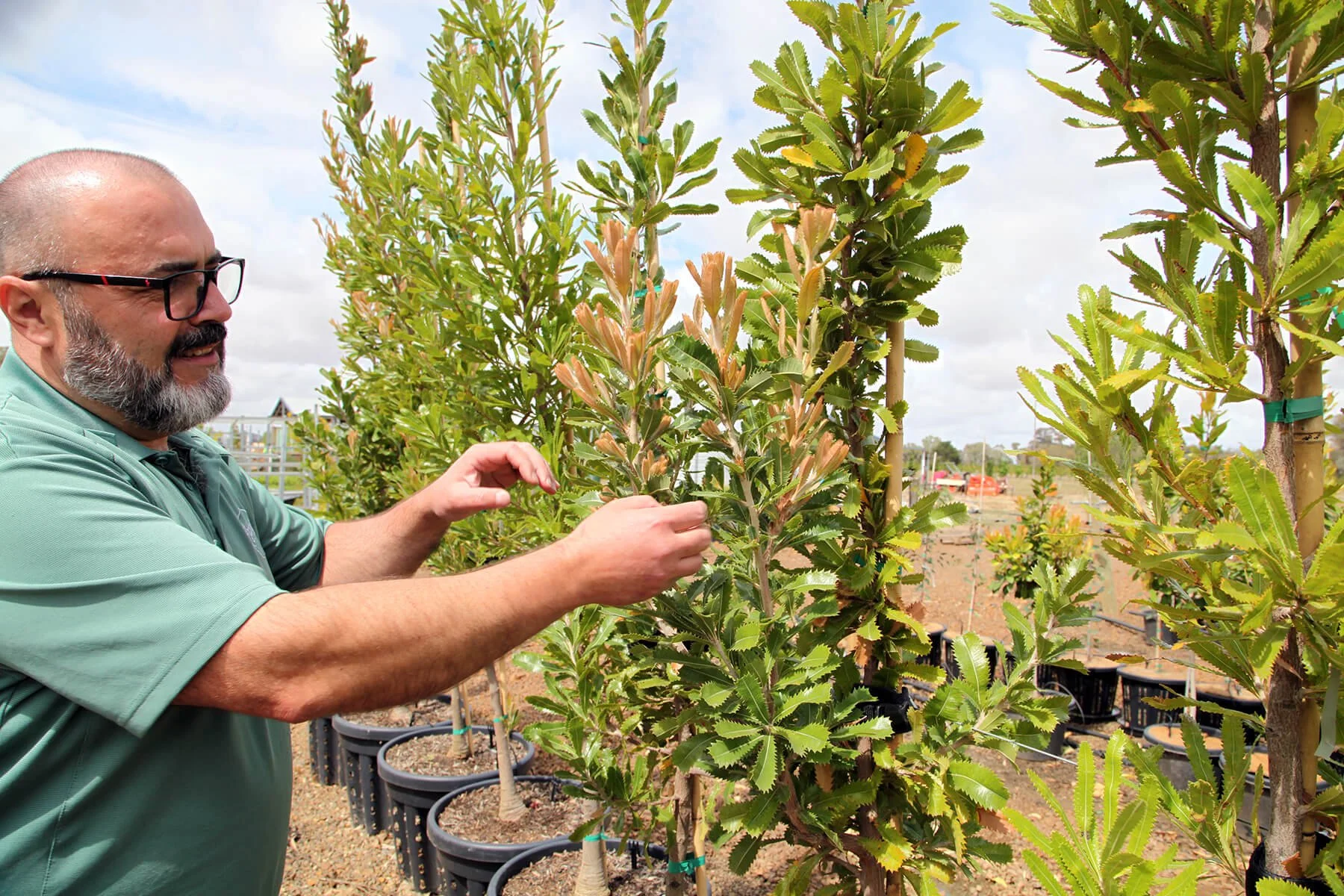
Quick guide: Banksia serrata at a glance
Pros:
High tolerance to wind, salt, and low-nutrient soils
Long-lived, low water needs after establishment
Structural form with bold bark and foliage
High habitat value: nectar, seeds, shelter
Works in civic, roadside and open-park planting
Considerations:
Slower growth (which suits some sites)
Needs excellent drainage (avoid heavy clays)
Large cones may not suit high-traffic zones
Early shaping helpful for urban form
Not ideal near overhead wires
Where it works best
We’ve seen Banksia serrata really shine in exposed coastal projects - on foreshore paths, reserves, and places where salt spray would restrict a lesser tree. It also earns its spot in wide urban verges where it’s got room to stretch.
In larger parks and naturalised zones, it pairs beautifully with Leptospermum, Eucs and Lomandra. And we’d back it in reveg zones too, as it’s tough enough to thrive. The bonus is its biodiversity value - drawing in birds, pollinators, and other fauna with minimal inputs.
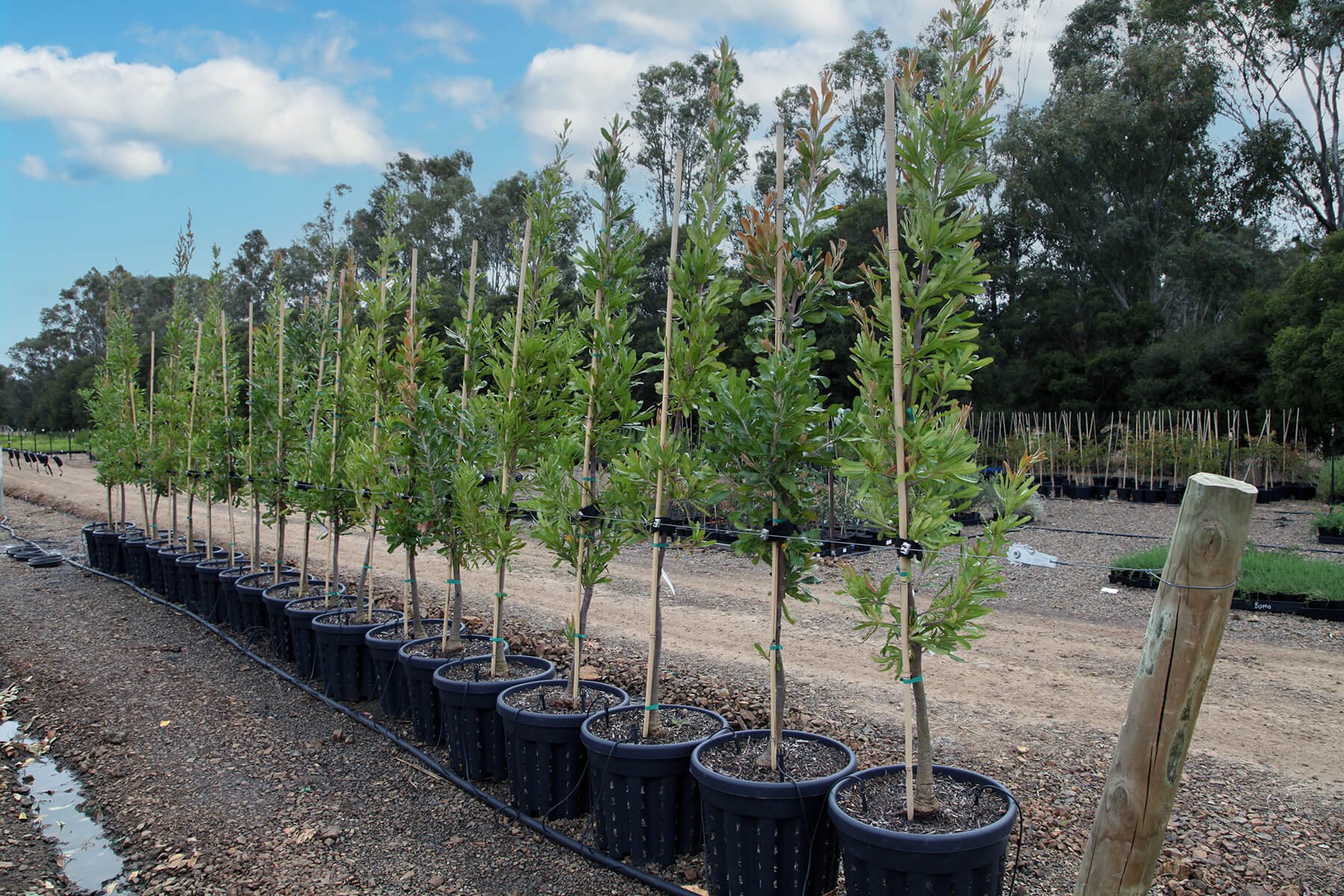
Ready when you are
If you’re planning coastal or civic work this summer, we’re happy to walk the serrata rows with you. Stock is looking strong this season and it’s ready to go - now’s the perfect time to plant the Banksia serrata.
Contact Zac to reserve trees or schedule a visit.
